Choosing an SEO Approach for a Small Business or Online Store
SEO for small businesses and ecommerce combines the approach that matches the customer journey: Local SEO for location-based demand, E-commerce SEO for product discovery, and broader SEO Services for site-wide growth. SEOGeelong.au assesses the business model, audience, website and goals before recommending the right mix.
What Is SEO for a Small Business?
SEO for a small business is a search marketing approach that improves how the business appears for relevant searches and helps potential customers reach the right page.
Search engine optimisation connects a business with people using organic search. The work follows the customer journey, from early research through to an enquiry or purchase.
Our team studies search intent to understand what people want from each query. We then align service pages, product information and content with that intent so visitors can take the next useful step.
When Should a Small Business Focus on Local SEO?
Local SEO is the right focus when customers choose a business based on location, service area or nearby availability.
Local search intent often appears in searches for services near a particular place. A well-managed Google Business Profile can support local visibility by presenting accurate business information and relevant service details.
We also review service pages and local landing pages to ensure they explain where the business operates and what it offers. This approach helps connect local customers with the page that best answers their needs.
What Does E-commerce SEO Do for a Small Online Store?
E-commerce SEO improves how product and category pages match searches from people who are researching, comparing or ready to buy.
A useful product page answers product-specific questions and supports transactional intent. A category page helps shoppers understand the range available and supports broader product discovery.
We match page content to the customer journey, including commercial intent during comparison and purchase intent when a shopper is ready to act. Clear information can also help qualified traffic move towards online sales.
Which SEO Approach Fits Your Business Model?
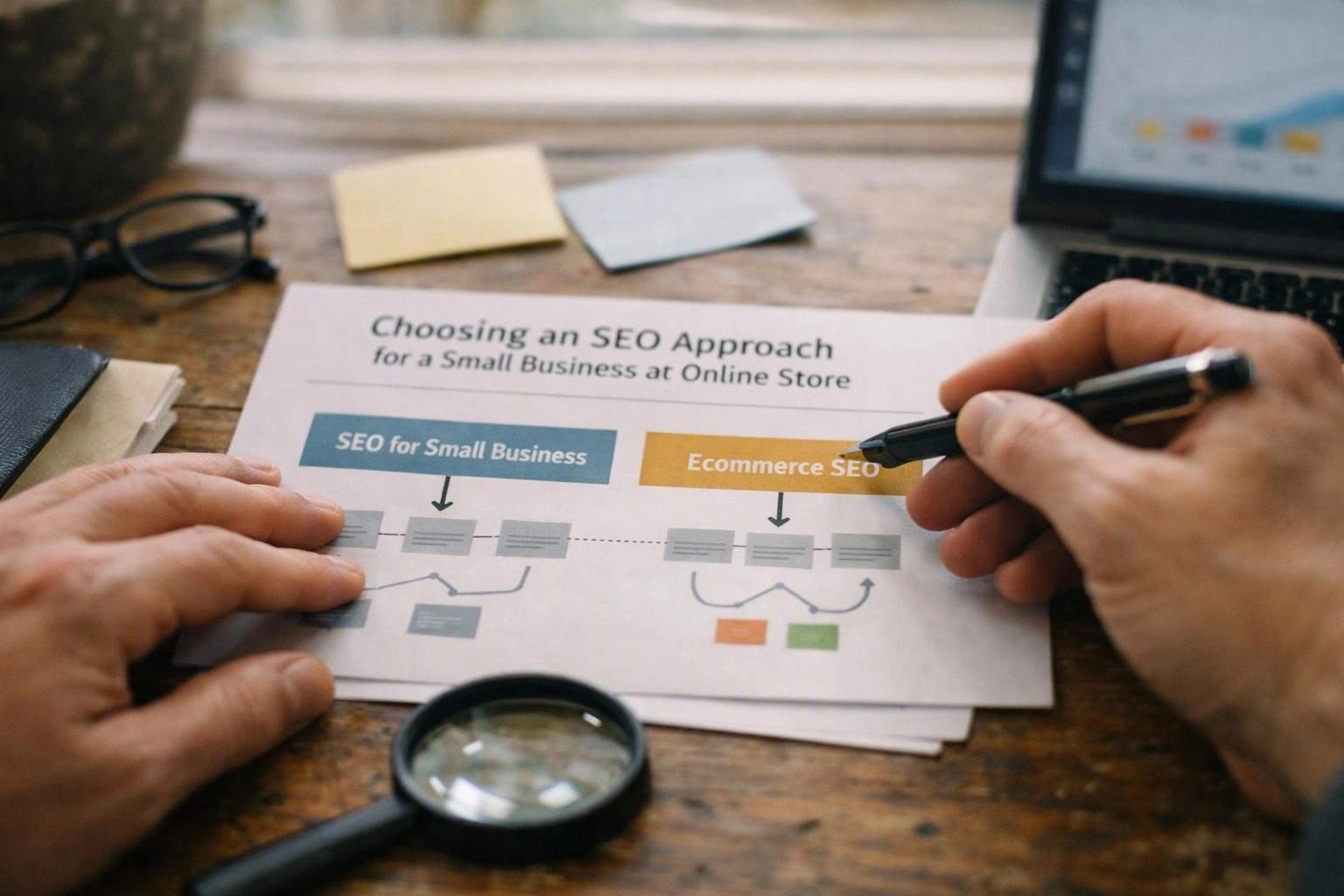
The right SEO approach depends on how customers search, what the business sells and which pages should receive organic visibility. The table below gives a practical starting point.
Many businesses use a combination of approaches. We adjust the mix when a business serves local customers and sells products through the same website.
| Business model | Suitable approach | Main focus |
|---|---|---|
| Service business | Local SEO | Service area, local search intent and enquiries |
| Online store | E-commerce SEO | Product discovery, category structure and sales journeys |
| Hybrid business | Local SEO, E-commerce SEO and broader SEO Services | Local demand, product searches and site-wide growth |
What SEO Does an Online Store Need?
An online store needs E-commerce SEO supported by sound site architecture, indexable product information, useful category pages and a technically accessible website.
Our technical SEO review checks indexing, mobile usability and the way search engines access important pages. We also examine structured data, product feeds and internal linking so products and categories are connected clearly.
Faceted navigation can create many similar URLs, while weak page structure can make important products harder to find. We look for duplicate content and other technical barriers before setting priorities.
How We Build the Right SEO Approach
Our team builds an SEO plan around the business model, customer journey and website priorities. Each step helps separate useful work from activity that does not support the business goal.
What Changes the Cost of an SEO Project?
SEO project cost changes with the website's size, technical complexity, number of products or locations, content requirements and implementation scope.
A small service website may need a different level of research and technical work from an online store with many product categories. Competition and the amount of implementation support also affect the work required.
Our SEO quote is based on the priorities we identify after reviewing the website and business goals. Free Estimates Available after we assess the work required.
How Do You Measure Progress from SEO?
SEO progress is measured by whether the right pages gain relevant visibility, attract qualified visitors and support enquiries or sales.
We review organic traffic and search visibility alongside the pages receiving that attention. Search Console data can show how pages appear for relevant searches, while analytics helps us understand visitor behaviour.
For a service business, qualified leads may be the key outcome. For an online store, product discovery, conversion rate and online sales may provide a clearer view of progress.
Which SEO Service Should You Start With?
The best starting point is the SEO service that matches the business model, website priorities and search intent. Our team uses the existing website and goals to set that starting point.
Businesses with both local services and products may need a combined plan. We prioritise the work that best supports the customer journey and creates a clear path to measurable business outcomes.