SEO Migration Checklist: What to Do Before Moving or Redesigning a Website
An SEO migration checklist covers the planning, technical checks, launch controls and post-launch validation needed to protect organic visibility during a website move or redesign. At SEOGeelong.au, we use the checklist to review URLs, redirects, crawlability, indexation, analytics and search performance across the migration.
What an SEO Migration Checklist Covers
An SEO migration checklist is a planning and validation framework that protects search visibility when a website changes its URLs, platform, design, domain or technical structure.
A website migration can involve a domain migration, platform migration, CMS change, URL restructure or website redesign. Each change can affect organic search visibility, user journeys and the way search engines crawl and index pages.
We use the checklist to connect technical SEO decisions with content, internal linking, analytics and launch testing. This approach helps us identify risks before they affect search rankings or visitors.
Before the Website Move: Build the Migration Plan
A migration plan gives the website move clear scope, ownership and validation steps before production deployment begins. We establish the baseline first so changes can be checked against the existing website.
Our pre-launch process covers the following tasks:
A clear plan also makes content parity easier to test. We record which pages, signals and user journeys must remain available after the move.
Which SEO Assets Need to Be Preserved Before Launch?
SEO assets to preserve include valuable URLs, page signals, internal links, structured data and search engine access controls.
We preserve indexable URLs that attract search visits or support important user journeys. We also record title tags, meta descriptions, canonical tags, internal links and structured data so the new pages retain their intended signals.
The XML sitemap should contain the correct indexable URLs after launch. Robots.txt must allow appropriate crawling, while noindex directives must be used only where they are intended.
Content parity matters as well. A redesigned page should retain its useful subject coverage, headings and relevant internal links unless there is a documented reason to change them.
Create a URL and Redirect Mapping Table
A URL and redirect mapping table connects each retained or changed old URL with its intended new destination and the required redirect behaviour.
We map pages before launch and check the final rules in the production environment. The table should identify direct destinations and prevent redirect chains, redirect loops and unnecessary 404 errors.
| Old URL | New URL | HTTP status code | Validation notes |
|---|---|---|---|
| Existing page URL | Matching retained or replacement URL | Direct response or 301 redirect | Confirm destination, content parity and crawl access |
| Removed page URL | Relevant replacement where one exists | 301 redirect or appropriate error response | Check that the destination serves the same user need |
| Redirected URL | Final canonical destination | Direct 301 redirect | Remove chains and loops |
A 301 redirect should lead directly to the closest relevant new page. We test redirected paths with internal links, external references and common user entry points.
During the Website Move: Control the Launch
Launch controls keep the production deployment accessible to users and search engines while the new website replaces the old one. We use a release checklist so technical settings are checked at the point of change.
During launch, we complete these checks:
We also test important user journeys during the release. Search access, navigation and conversion paths should work on the live website, not only on the staging site.
How Should Technical SEO Be Checked During Launch?
Technical SEO should be checked during launch by verifying that search engines and users can access, render and navigate the new website without blocking directives or broken paths.
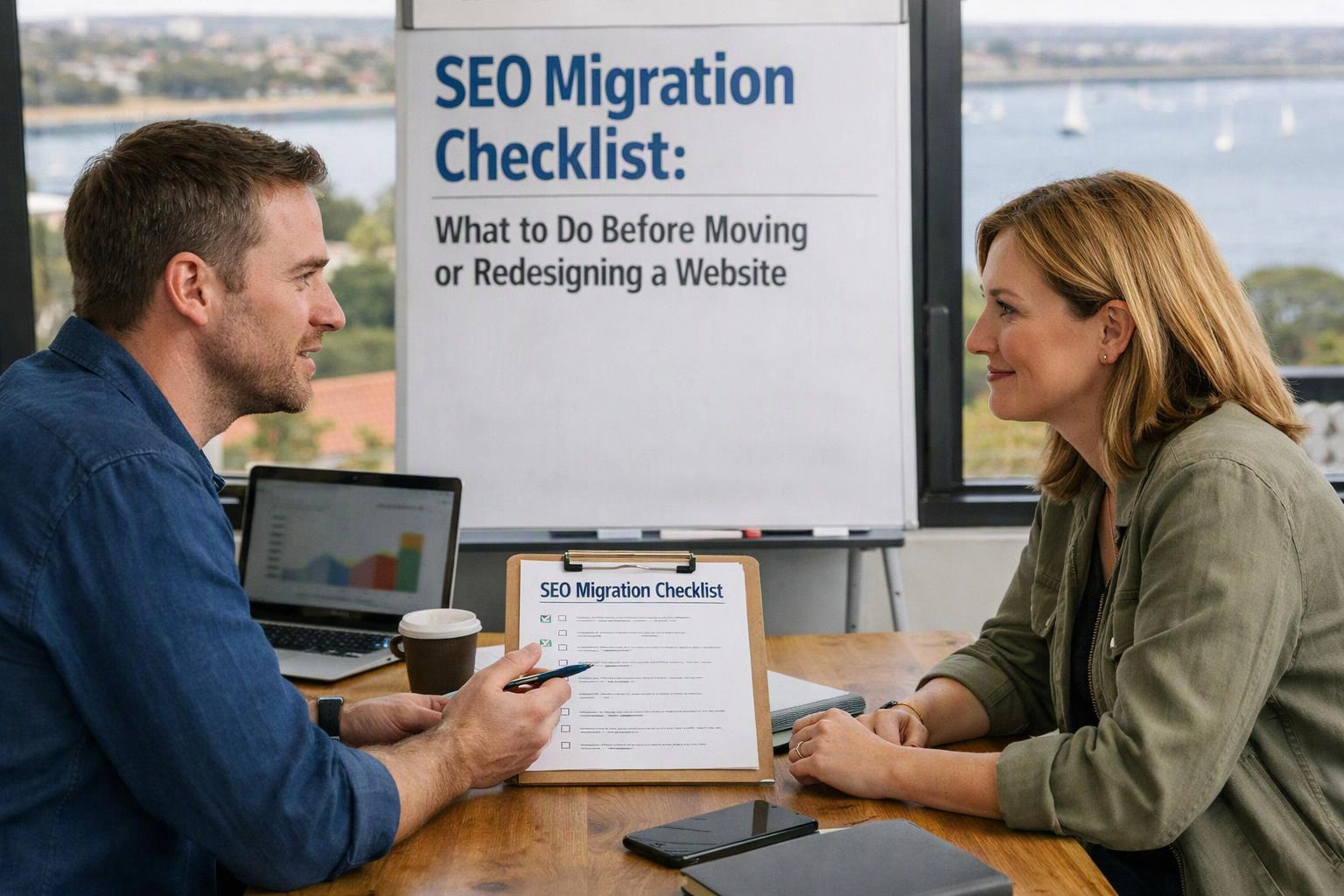
We check crawlability and indexability by reviewing robots.txt, noindex directives, canonical tags and server responses. We test rendering on key templates so important content is available to search engines and users.
Mobile usability, HTTPS and internal linking need live checks because deployment settings can differ from the staging environment. We also inspect navigation, forms and landing page paths to confirm that the new URL structure supports real user journeys.
A server response check helps identify broken pages, unexpected redirects and access errors. These checks form part of our Technical SEO review during a website migration.
After the Website Move: Validate Search Performance
Post-launch validation shows whether the new website is being crawled, indexed, visited and measured as intended. We compare technical evidence with organic traffic, rankings and user actions.
Our post-launch checks include:
We keep monitoring focused on evidence from search reports, analytics and the website itself. This makes it easier to separate migration issues from normal changes in demand or search behaviour.
What Red Flags Can Harm a Website Migration?
The main website migration red flags are broken redirects, blocked crawling, accidental deindexation and lost tracking or internal links.
We check these warning signs because each one can interrupt search access or send users to the wrong destination.
Other warnings include missing canonical tags, broken internal links, incomplete content parity and analytics events that no longer fire. We prioritise issues that affect valuable pages and key user journeys.
How Analytics and Search Console Confirm the Migration
Analytics and search reporting confirm a migration by showing whether users, search engines and conversions continue to reach the intended pages.
We use Google Analytics to check organic traffic, landing pages, user journeys and conversion tracking. These checks show whether visitors can move through the new website and complete important actions.
Google Search Console helps us review search queries, index coverage, crawl reports and URL inspection results. We compare those findings with redirect tests and technical checks from the live website.
Our Web Analytics validation also checks that tracking remains connected to the correct domain, page templates and conversion events. A reporting gap can hide a migration problem, so measurement is tested alongside crawlability and indexability.
When Should SEOGeelong.au Review an SEO Migration?
An SEO Migration review is appropriate when a website move, redesign, platform change, domain change or URL restructure could alter search access or user journeys.
We review migrations before launch when the project changes URLs, templates, navigation, content, hosting or technical controls. Early review gives us time to build URL mapping, test the staging site and resolve issues before production deployment.
A review also helps when a live migration has caused crawl errors, ranking changes, traffic loss, broken conversions or uncertain index coverage. Our work can cover Web Development, Technical SEO and Web Analytics evidence in one migration audit.
Exact review requirements depend on the website project, its URL structure and the changes planned. To discuss the scope, contact our team.
What the SEO Migration Review Includes
An SEO migration review includes technical checks, URL and redirect validation, content comparison, analytics testing and post-launch monitoring.
We begin with a technical audit that covers crawlability, indexability, rendering, HTTPS, server response and mobile usability. We then compare the old and new URL structures to identify missing destinations, redirect chains and broken paths.
Content parity checks compare important page subjects, headings, metadata, canonical tags, structured data and internal links. We also validate robots.txt, noindex directives and the XML sitemap against the intended search access rules.
Analytics validation covers Google Analytics, Google Search Console, landing pages, search queries and conversion tracking. After launch, our monitoring connects crawl reports with organic traffic, rankings and user journeys.
Our review gives the migration team a practical record of what was checked, what needs correction and what should be monitored after the website move.
Questions About Website Migration SEO
What is the difference between a website redesign and an SEO migration?
A website redesign changes the visual design, layout or user experience, while an SEO migration manages the search risks created by changes to URLs, content, platforms, domains or technical structure.
Do all old URLs need redirects during a website move?
Not all old URLs need redirects, but valuable or changed URLs should have a relevant direct destination where one exists. Each URL needs review so the migration does not create unnecessary 404 errors or send users to unrelated pages.
Should a website migration be tested on a staging site?
Yes, a website migration should be tested on a staging site before production deployment. Staging checks can identify broken links, incorrect canonicals, blocked crawling, rendering problems and missing content before users reach the new website.
How can analytics tracking be checked after a website migration?
Analytics tracking can be checked after a website migration by testing page views, landing pages, traffic sources, forms and conversion events on the live website. Google Analytics reports should be compared with Google Search Console data and real user journeys.