SEO, Google Ads and Social Media: When to Use Each
SEO, Google Ads and social media support different stages of marketing, and SEOGeelong.au uses the business goal, audience and buying journey to decide whether one channel or a combined strategy fits best. Digital marketing channels are selected and combined according to business goals, search intent, audience behaviour and marketing stage.
How SEO, Google Ads and Social Media Differ
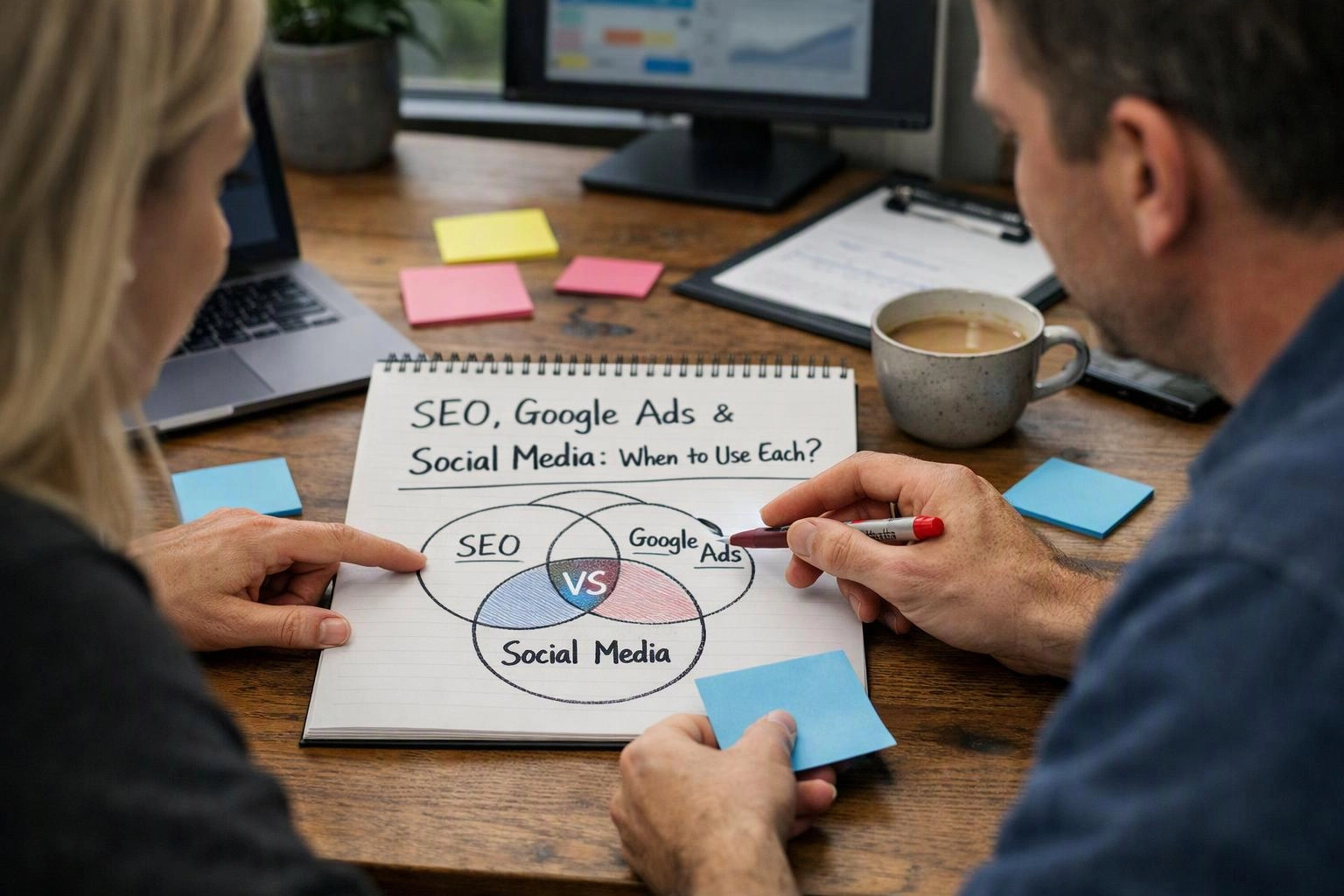
SEO builds organic visibility, Google Ads captures paid search demand, and social media marketing creates audience engagement. The right option depends on search intent, buying stage and the type of attention your business needs.
Each channel can support customer acquisition, but each works differently across the marketing funnel.
| Channel | Main role | Best suited to | Traffic type |
|---|---|---|---|
| SEO | Improve visibility in organic search | Long-term growth and informational or commercial searches | Organic traffic |
| Google Ads | Place paid messages in front of active searchers | Commercial intent and immediate campaign objectives | Paid traffic |
| Social media marketing | Build awareness and interaction with an audience | Brand awareness, community engagement and visual content | Organic and paid social traffic |
When SEO Is the Right Marketing Choice
SEO is the right choice when a business wants to build organic visibility around useful searches over time. SEO works well when people already use search engines to find answers, compare options or assess services.
We use keyword targeting to match pages with search intent. Informational intent may need helpful guides, while commercial intent usually needs clear service pages and strong calls to action.
Our work can include technical SEO, on-page optimisation and a content strategy. These elements help search engines understand a website and help visitors judge the quality of traffic they receive.
SEO is a strong fit for businesses seeking long-term traffic, but it requires consistent work across content, site structure and technical health.
When Google Ads Should Lead the Campaign
Google Ads should lead when a business needs to reach people who are already searching with commercial intent. Paid search can place a relevant message in front of an audience while organic visibility is still developing.
We structure search campaigns around clear campaign objectives. Ad groups organise related keyword themes, while focused ad copy helps connect the search query with the offer.
Landing pages should continue the message from the advert. They need to explain the service clearly and make the next step easy to understand.
Conversion tracking shows which campaigns, search terms and landing pages contribute to lead generation. We use that information to assess the quality of traffic and guide future decisions.
When Social Media Marketing Has the Strongest Role
Social media marketing has the strongest role when audience behaviour, visual communication and ongoing interaction matter most. Social platforms can introduce a business to people who are not actively searching yet.
Social media supports brand awareness through useful posts, visual content and regular community engagement. It can also help a business show its personality and explain how its offer fits real customer needs.
Audience targeting can help paid social media advertising reach selected groups. Retargeting can reconnect with people who have already visited a website or engaged with content.
Social media is less about matching a single search query and more about creating attention, trust and movement through the customer journey.
When SEO and Google Ads Work Better Together
SEO and Google Ads work better together when a business needs both immediate search visibility and a stronger long-term organic position. We connect the data and messages across both channels so each activity informs the other.
This combined approach helps us assess search visibility as a complete system. It also gives the business more context when reviewing the conversion rate and quality of traffic from each source.
How SEO, Google Ads and Social Media Can Work Together
Integrated marketing connects SEO, Google Ads and social media across the customer journey. Each channel can support a different part of the marketing funnel, from first contact through to enquiry or purchase.
SEO can provide useful content for content distribution, while social platforms help place that content in front of relevant audiences. Google Ads can capture people who show stronger buying intent after they have seen a brand or researched a problem.
Remarketing can support the journey when someone visits a website without converting. Cross-channel measurement then helps us understand how several interactions contribute to the final action.
The best mix depends on campaign objectives, audience behaviour and the quality of each channel’s traffic. We avoid treating every platform as a separate activity when the customer journey crosses several channels.
Four Ways SEO and Google Ads Support One Another
SEO and Google Ads support one another when the team shares evidence, landing page insights and clear priorities. The relationship can improve decisions without assuming that both channels should receive the same level of investment.
We use these connections to make the marketing strategy more deliberate. A change in one channel can then be assessed for its effect on the wider search and conversion system.
Which Marketing Channel Should a Business Use First?
The right first channel depends on whether the immediate priority is existing search demand, long-term organic growth, audience engagement or a combination of these goals.
Channel selection should reflect business goals, target audience, sales cycle, available budget and conversion goals. A business with strong existing search demand may prioritise paid search, while a business focused on lasting organic growth may begin with SEO.
How We Build a Channel Strategy
We build a marketing strategy by assessing the website, search intent, competitors and the actions that matter to the business. Our team connects the findings to a practical channel plan instead of choosing a platform by habit.
Our website assessment covers structure, content needs, landing pages and conversion tracking. Competitor analysis helps us identify gaps in search visibility and areas where clearer positioning may improve the customer journey.
We then recommend how SEO, Google Ads and social media can work alone or together. The cost depends on the channels selected, the amount of technical and content work required, campaign complexity and the level of ongoing management.
SEO Services can support the organic side of the plan, while our broader recommendations can include paid search and social media activity. We provide Free Estimates Available and use upfront pricing when preparing the proposed work.
Our team can explain the recommended priorities, what each part includes and how to request an exact quote for the selected strategy.
Questions About SEO, Google Ads and Social Media
Is SEO better than Google Ads for a new business?
Neither channel is always better for a new business because the right choice depends on search demand, budget, sales cycle and the need for immediate or long-term visibility. Google Ads can support active searches, while SEO builds organic visibility and useful content over time.
How is SEO different from social media marketing?
SEO helps a website appear for relevant searches, while social media marketing builds attention and engagement on social platforms. SEO responds more directly to search intent, while social media can reach people before they actively search.
Can social media support an SEO strategy?
Yes, social media can support an SEO strategy by distributing content, building audience engagement and bringing more people into the customer journey. Social activity does not replace technical SEO or content planning, but it can help useful content reach a wider audience.
Should Google Ads and SEO use the same landing pages?
Google Ads and SEO can use the same landing page when the page matches both the search intent and the advert message. Separate pages may be more suitable when paid campaigns need a focused offer or when organic content serves a broader informational purpose.