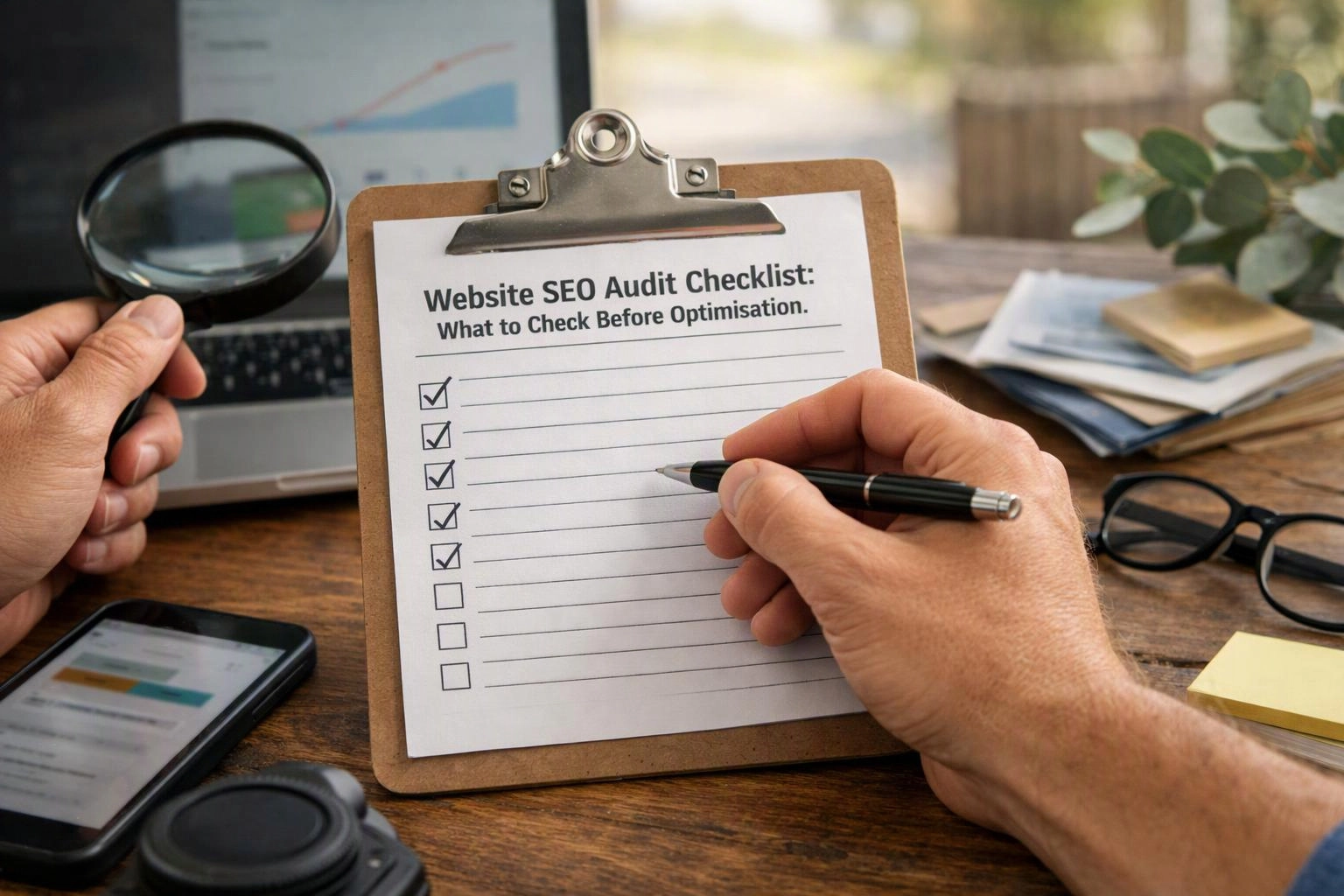
Website SEO Audit Checklist: What to Check Before Optimisation
A website SEO audit checklist checks technical health, crawlability, indexation, content, on-page signals, links, analytics and conversion paths before optimisation. SEOGeelong.au uses these checks to identify issues, prioritise actions and connect findings with SEO Audits, Technical SEO, On-Page SEO and Web Analytics.
What Does a Website SEO Audit Check?
Website SEO audits check whether search engines can access, understand and evaluate a website, while also checking whether visitors can use it and take the intended action.
A complete audit brings together technical SEO, on-page SEO, content quality, links and Web Analytics. It connects search engine visibility with user experience, organic search performance and business outcomes.
The review can reveal crawl errors, indexation problems, content gaps, weak internal linking and measurement issues. These findings provide a practical base for SEO recommendations.
What to Check Before the SEO Audit Begins
Before an SEO audit begins, the audit scope must reflect the business goals, audience and website history. Clear access and context help us separate important issues from low-priority technical warnings.
We use the following preparation checks to establish what the website needs to achieve and what evidence is available.
What to Check During the Technical SEO Review
A technical SEO review checks whether search engines can crawl, process and index important pages. We also assess website performance and mobile usability because technical barriers can affect both visibility and page experience.
Each item should be checked in context. A warning matters most when it affects valuable pages, user access or the website’s ability to support search intent.
Which On-Page and Content Signals Need Review?
On-page and content checks review whether each important page matches search intent, communicates its subject clearly and gives users a complete answer.
A content audit should examine title tags, meta descriptions and heading hierarchy. These signals help users and search engines understand the page topic.
We also review keyword targeting, content quality, duplicate content, internal linking and image alt text. The aim is to identify useful content gaps and improve the connection between related pages.
How to Check Links, Authority and Search Visibility
Link checks show how pages connect within the website and how external websites refer to it. We assess links for usefulness, relevance and their role in organic visibility.
The review should combine link data with competitor search results. This helps distinguish a technical linking problem from a broader content or authority opportunity.
What to Check in Web Analytics Before Optimisation?
Web Analytics checks show which pages attract organic visitors, what those visitors do and whether measurement captures meaningful business actions.
Google Analytics and Google Search Console provide different views of performance. We compare them with landing page data, engagement signals and conversion data to understand the customer journey.
Conversion tracking, goal tracking and attribution should reflect the actions that matter to the business. Without reliable measurement, optimisation priorities can favour visits while overlooking valuable outcomes.
How to Prioritise SEO Audit Findings After the Review
SEO audit findings should be prioritised by their business impact, search impact and implementation effort. A clear order turns technical issues into an actionable optimisation roadmap.
We group related findings so the team can address root causes and avoid disconnected fixes. The final SEO recommendations should explain the issue, its effect and the next practical action.
Which SEO Audit Problems Should Raise a Red Flag?
SEO audit problems should raise a red flag when they prevent important pages from being crawled, indexed, understood or measured. These issues can affect search visibility and business decisions at the same time.
Red flags need context, but each one deserves prompt investigation before wider optimisation work begins.
How SEOGeelong.au Turns Audit Findings into an Optimisation Plan
SEOGeelong.au turns audit findings into a prioritised optimisation plan by connecting technical issues, content opportunities, measurement gaps and business objectives.
Our team organises findings across SEO Audits, Technical SEO, On-Page SEO and Web Analytics. We explain which actions support crawlability, indexability, search intent, organic visibility and conversion tracking.
The resulting SEO recommendations give your team a practical sequence for resolving barriers, improving useful pages and measuring meaningful outcomes. Free Estimates Available.
Supply the website address, business goals, key services, target audience, relevant access details and any recent migration information so we can scope the review accurately.
Get a Free EstimateQuestions About a Website SEO Audit Checklist
What is included in a website SEO audit?
A website SEO audit includes technical SEO, content, on-page signals, links, Web Analytics and conversion paths. The review checks how these areas affect crawlability, indexability, search visibility, user experience and business outcomes.
Can an SEO audit identify why a page is not indexed?
Yes, an SEO audit can identify common reasons a page is not indexed, including noindex directives, blocked crawling, incorrect canonical URLs, technical errors and weak page signals. Google Search Console can add useful evidence about indexation and discovery.
Should SEO fixes be made before new content is published?
Yes, important SEO fixes should be addressed before new content is published when existing technical issues could prevent crawling, indexation or measurement. Content can be planned alongside the fixes when it supports clear search intent and business goals.
How can website owners use Google Search Console during an SEO audit?
Website owners can use Google Search Console to review search performance, indexing information, crawl details and page experience signals. The data helps connect technical findings with real search visibility.
What information should be supplied for a website SEO audit?
Website owners should supply the website address, business goals, target audience, priority services, target keywords, relevant platform access and website migration history. Google Search Console and Google Analytics access can improve the quality of the review.